Between the Lines
John had always found women hard to read. Some favoured long, looping fonts, a copperplate calligraphy like wedding invitations. Others created typescripts of their own design, with angular, ragged corners that seemed sliced by razors. Cooks mixed homebrew inks that blurred and fuzzed like prison tattoos.
The trend had begun online, of course. The proximate cause was an actor, a romantic lead in some long-gone golden age. He had overcome allegations from thirty-six separate women to return to the screen, a triumphant silver fox.
It was not an unusual episode, per se. But for some reason this particular outrage—and the fashion it spawned—leaped the bounds of social media and captured what remained of the high street.
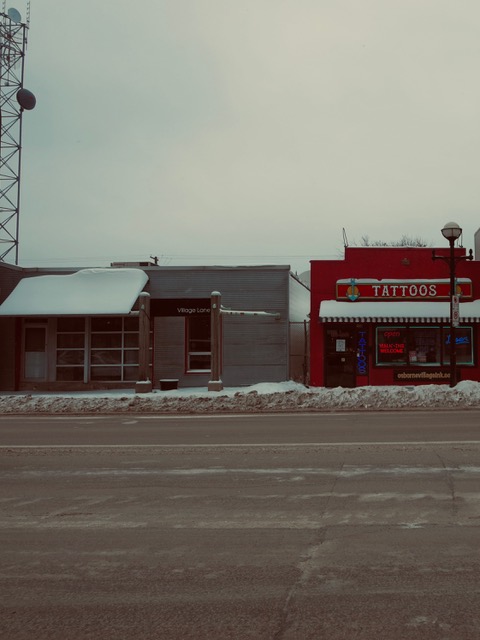
Within months, tattoo parlours were as common as hairdressers. Ink basics and freehand design appeared alongside nail tech and beauty therapy on college curriculums. At the Golden Globes, a tattoo cam replaced the mani cam of yore.
At first, like most men, John welcomed the new transparency. But females remained complicated. Some contradictory creatures opted for abstracts, carving expressionist swirls of colour and pain. Others wrote and overwrote old traumas. One chain had a machine that turned women like rotisserie chickens to prick out a message until repetition rendered it illegible. John and his friends avoided these types: too much drama.
John was, at heart, a visual man. But only the boldest women opted for pictures and even these were rarely literal enough to deliver the assist he needed. He preferred the tidy, sequential squares of a comic strip to the overlapping, ever-evolving universe of a multi-artist sleeve.
In fact, even when he had a new encounter in his bed, John remained confused. Women seemed to save their revelations for the last available moment.
In a pub that majored on craft beer and open-mic nights, he met a girl whose wrists were decked in bracelets of blue and yellow daisies. Matters progressed well, until she removed her vintage blouse and lacy bra to reveal “Warning: rape survivor” chiselled in a Gothic metal font over her heart.
Heading towards closing time at a meat-market nightclub, John bought shots for a trim blonde with a plump and juicy face. She looked in her mid-twenties under neon, but, as he entered her doggie style, he read her tramp stamp: “Grandma and loving it.” She had placed bubble hearts over the ‘i’s.
Even apps couldn’t protect John from the flood of revelations. He pinched and zoomed to read the tolerably standard tale of early marriage and rapid divorce engraved on one woman’s bicep. It was only later, after he removed both jeans and panties, that he found “two emergency Caesareans, both too late” traced in the finest of fine-line scripts above her surgical scar.
Because even then, even with their narratives literally inscribed upon their bodies, John couldn’t figure out what women wanted him to say. They needed, he thought, to be like men: direct.
Theodora Sutcliffe is a freelance writer. Her journalism has been published in titles including the BBC, the Guardian and National Geographic Traveler; her short stories have appeared in titles including Fictive Dream, Analog and Molecule. She recently completed Curtis Brown Creative’s Writing Your Novel course and is working on a novel. You can find her practising yoga or on theodorasutcliffe.com.