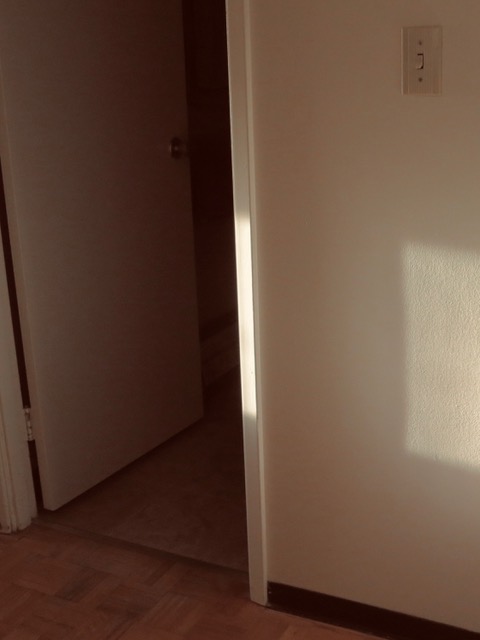
Body as a Single-Family Home
My ribcage must be the foyer, all high ceilings and wasted space and a place for the air to circulate. Small voices echoing off the walls of my lungs.
Somewhere around the back, the length of the kitchen running along my spine. Kitchens hold the whole house up, I remember my grandmother saying once, and I imagine a table somewhere near the heart, where everything is nourished before dispersing to other corners of the home.
A den in the hollow of my stomach, at the center where so many other rooms converge, where you’d gather almost by accident and want to stay.
Bodies are, after all, built to house life.
The long hallways of my arms, where sometimes, I swear I can feel their footsteps, where I look down and expect to see the skin rise up, something pushing against me from the inside.
And somewhere in the cave of my hips, a basement, a space to store all the unneeded things we can’t give up. The kind of place children might crawl through in the dark, shrieking at cobwebs and spooking each other, but still knowing they were safe, that they were surrounded only by their own histories.
Bedrooms must be in the shoulders: two wings of the house. Beds nestled in the spot under my clavicle, where I can feel the pulse. Steady breath, something alive in me stirring like it’s waking to early morning.
These things happen, the doctor said to me, twice now, when there was no heartbeat, when something had been growing, and then was not.
They say that during pregnancy, a baby’s cells enter the mother’s bloodstream and remain there for years, for decades. The child’s DNA threaded through the mother’s veins, running the length of her body for all of her days, and I think this is why I still feel them here, deep in the pockets of my own body, the only place I get to keep them. When I feel anything foreign under my skin—a minor cramp, a sharp twinge, any old ache—I tell myself it’s only the children, running down the hall, jumping on their beds, giggling from under a kitchen table. I tell myself they never came out because they were already home.
Kara Oakleaf’s work has appeared in SmokeLong Quarterly, MoonPark Review, Wigleaf, matchbook, Booth, Nimrod, Pithead Chapel, and elsewhere. Her fiction has been selected for Best Small Fictions and the Wigleaf Top 50, and appears in the Bloomsbury anthology Short-Form Creative Writing. She received her M.F.A. at George Mason University, where she now teaches directs the Watershed Lit Center and the Fall for the Book literary festival. Find more of her work at karaoakleaf.com.