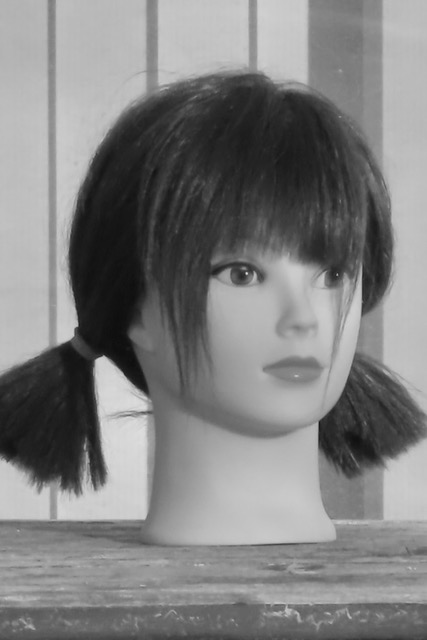
Instructions for Leaving a Human Being Outdoors by Blake Pierpoint
Choose a table that does not rock. Test each corner with your palm. She cannot steady herself now; the table must do it for her.
Face her toward the kitchen window, not the street. Through the glass she can watch you rinse a cup, close the cupboard, cross the room again.
Before you touch her, say what you are going to do, then place one hand beneath the jaw and the other at the nape. Do not lift her by the hair, even if it seems the only part made for holding.
Tie the ribbons loosely, the left one lower. By noon it was always coming undone.
Draw the shade between eleven and three, when her skin warms fastest.
Do not mistake warmth for improvement.
If moisture gathers behind the eyes, check the seal, then check it again. If nothing has failed, wipe her face without comment.
When neighbors ask how she is, tell them she is having a quiet day; it is the answer they accepted last week. Children may wave. Let them. Do not answer for her.
Do not discuss the prognosis within hearing. You have already been wrong about what she cannot hear.
If rain begins, do not move her. Stay beside her until it passes, then dry the hollows behind her ears.
Dry her mouth last.
At dusk, turn on the kitchen light before the glass stops showing her the room. Pull out a chair and sit across from her.
Tell her something ordinary. The grocery store moved the tea again. The dog next door barked at the hose for an hour, and the cupboard hinge still catches.
When you run out, wait.
Untie the ribbons while you can still see the knots. She never slept in them.
When the kitchen is lit and the yard is dark, ask whether she is ready to come inside.
Do not go inside until she answers.
 Blake Pierpoint is a writer and medical student based in Virginia, pursuing a career in neurology. His work is informed by medicine and by an interest in the subtle ways people experience change, loss, and uncertainty. More of his writing can be found at blakepierpoint.com.